Εμφάνιση αναρτήσεων με ετικέτα ΑΡΘΡΑ / Weisbrot. Εμφάνιση όλων των αναρτήσεων

Τετάρτη 18 Απριλίου 2012

Argentina’s Critics Get it Wrong Again


foto: http://www.lukasvasilikos.com/
Argentina's critics are wrong again about renationalising oil
In taking back oil and gas company YPF, Argentina's state is reversing past mistakes. Europe is in no position to be outraged


ΠΗΓΗ: guardian, Wednesday 18 April 2012

By Mark Weisbrot


The Argentinian government's decision to renationalise the oil and gas company YPF has been greeted with howls of outrage, threats, forecasts of rage and ruin, and a rude bit of name-calling in the international press. We have heard all this before.


When the government defaulted on its debt at the end of 2001 and then devalued its currency a few weeks later, it was all doom-mongering in the media. The devaluation would cause inflation to spin out of control, the country would face balance of payments crises from not being able to borrow, the economy would spiral downward into deeper recession. Then, between 2002 and 2011, Argentina's real GDP grew by about 90%, the fastest in the hemisphere. Employment is now at record levels, and both poverty and extreme poverty have been reduced by two-thirds. Social spending, adjusted for inflation, has nearly tripled. All this is probably why Cristina Kirchner was re-elected last October in a landslide victory.

Τρίτη 10 Απριλίου 2012

Jean-Luc Mélenchon has what France needs. Sarkozy and Hollande do not


ΠΗΓΗ: Guardian
M. Weisbrot
France's conservative president, Nicolas Sarkozy, ran for office in 2007 on a programme of making the French economy more like that of the United States. He picked a bad time for that: the US was on the brink of its worst recession since the Great Depression, and would help drag down Europe and much of the world economy as the American economy collapsed. He probably wouldn't want to say these things today, after the US has had four years with hardly any economic growth at all.
But Sarkozy did succeed in making the French economy more like the US in some ways. After being one of the few high-income countries that didn't have an increase in inequality from the mid-1980s to the mid-2000s, France has become more unequal since Sarkozy was elected. For example, the ratio of the income of people in the 99th percentile (near the top) to the first percentile (at the bottom) went from 11.8 to 16.2. Other measures of inequality have also increased significantly (the Gini coefficient rose from 26.6 to 29.9). This happened from 2007 to 2010; it is probably worse today. By raising the retirement age – a wholly unnecessary change that drew enormous opposition and protests – Sarkozy also helped to make France even more unequal.

Παρασκευή 2 Μαρτίου 2012

CEPR: Περισσότερος πόνος –   κανένα όφελος για την Ελλάδα από τη  συμφωνία


ΠΗΓΗ: CEPR
του Mark Weisbrot and Juan Montecino


Oλόκληρη η Έκθεση στα Ελληνικά ΕΔΩ

Σύνοψη  
Την εβδομάδα αυτή η ελληνική κυβέρνηση κατέληξε σε συμφωνία με τις ευρωπαϊκές αρχές
και το ΔΝΤ για νέο δανεισμό 130 δις ευρώ, στο πλαίσιο ενός νέου πακέτου δημοσιονομικής
προσαρμογής για την αντικατάσταση του τρέχοντος προγράμματος, που ξεκίνησε το Μάιο
του 2010. Μολονότι η νέα συμφωνία θα επιτρέψει στην κυβέρνηση να μην προχωρήσει σε
αθέτηση πληρωμών τον Μάρτιο,  αμφισβητείται έντονα το αν θα οδηγήσει τη χώρα σε
επιστροφή στην ανάπτυξη και σε βιώσιμο επίπεδο δανειακής επιβάρυνσης, ώστε να μπορεί
να δανειστεί από τις ιδιωτικές κεφαλαιαγορές. 
Το πιο σημαντικό πρόβλημα με τις δεσμεύσεις της Ελλάδας τα τελευταία δύο χρόνια είναι
ότι η δημοσιονομική πολιτική είναι προκυκλική -  δηλαδή,  η κυβέρνηση δεσμεύεται να
περιορίζει τον κρατικό προϋπολογισμό, ενώ η οικονομία βρίσκεται σε ύφεση. Το 2010-11 η
ελληνική κυβέρνηση επέβαλε μέτρα για περικοπή των δαπανών κατά 8,7% του ΑΕΠ. 
Αλλά καθώς η οικονομία συνεχίζει να συρρικνώνεται,  γίνεται ακόμη πιο δύσκολο να
επιτευχθούν οι στόχοι των εσόδων. Οι προβλέψεις του ΔΝΤ επανειλημμένα υποτιμούν την
απώλεια ΑΕΠ, κι έχουν αναθεωρηθεί προς τα κάτω κατά ένα τεράστιο ποσοστό 6,9% από
την Πρώτη Επισκόπηση-Αξιολόγηση στο Πλαίσιο της Σύμβασης Δανειακής Διευκόλυνσης
(από δω και πέρα Αξιολόγηση)  τον Σεπτέμβριο του 2010.  Τα δύο τρίτα αυτής της
αναθεώρησης σημειώθηκαν μεταξύ της Τέταρτης και Πέμπτης  (τον Δεκέμβριο 2011) 
Αξιολόγησης του προγράμματος, δηλαδή μέσα σε μόνο πέντε μήνες.   
Αν και η προγραμματισμένη προσαρμογή για το 2012 προβλέπεται να αφορά κυρίως αύξηση
των εσόδων, η Πέμπτη Αξιολόγηση του ΔΝΤ δηλώνει σαφώς ότι θα πρέπει να γίνει στροφή
προς τις περικοπές δαπανών το 2013-2014.  Αυτό θα αυξήσει τον κίνδυνο καθήλωσης σε
παρατεταμένη ύφεση. 

Δευτέρα 6 Φεβρουαρίου 2012

The Eurozone: Self-Inflicted Depression


by Marc Weisbrot
Mark Weisbrot is co-director of the Center for Economic and Policy Research, in Washington, D.C. and President of Just Foreign Policy. He spoke to NLP's Alex Doherty on the continuing fiscal crisis in the eurozone.
The IMF has recently called for governments to slow the pace of their budget cuts - why do you think that states such as the UK and Germany are pursuing austerity measures with such little regard to the broader impact on their economies? 
Well it is always difficult and rather speculative to explain the motivations of political actors, especially when they do things that are not obviously in their own political interest. I mean, the economic crisis in Europe has already toppled the governments of the UK, Ireland, Greece, Spain, Portugal, and Italy.  So, one would think that governments in power now would want to be re-elected, and that the best way to get re-elected would be to bring about an improvement in the economy. Yet they are mostly pursuing policies that can be expected to make their economies worse, and even risking a more serious crisis.  How can this be explained?

Παρασκευή 16 Δεκεμβρίου 2011

Europe's leaders are playing with fire if they follow the Latvian example


ΠΗΓΗ: Guardian
by M. Weisbrot
In recent months some advocates of Europe's austerity policies have been touting Latvia as a success story that shows how "internal devaluation" can work. This was the theme of a book published earlier this year by the Peterson Institute for International Economics, one of Washington's most influential think tanks. The book was co-authored by the Institute's Anders Aslund and Latvia's prime minister Valdis Dombrovskis.
The case study is relevant to Europe because there are important similarities between Latvia's economic strategy since 2008 and that which is now being promoted by the European authorities – the European Commission, the European Central Bank, and the International Monetary Fund (IMF), otherwise known as "the troika".
At first glance it might seem ridiculous to call an economic strategy a success if a country loses 24% of its output – the worst in the world for the crash of 2008-2009 – and official unemployment shoots up from 5.3% in 2007 to more than 20% in early 2010.

Πέμπτη 8 Δεκεμβρίου 2011

Eurozone Crisis Enters New Phase as ECB Fights Europe for Austerity


Mark Weisbrot
Folha de São Paulo
(Brazil), December 7, 2011
Em Português
The house is on fire and the owners are arguing about what kind of safety regulations should be implemented in the future so as to prevent these types of fires.  That is what appears to be going on in the eurozone right now, as European leaders try to reach agreement on a series of measures that would impose “fiscal discipline” on member states in the future.

Of course, these would-be fire marshals haven’t even identified the correct safety regulations, since it was not over-borrowing by governments that caused this crisis, but rather over-borrowing, bubble-driven growth, and other excesses of the private sector.  But the most urgent problem right now is the fire itself – the eurozone is already in recession, according to the OECD, and their financial crisis is already slowing the world economy. This includes Brazil, which today announced that GDP growth for the third quarter has been zero.

Πέμπτη 10 Νοεμβρίου 2011

Italy pushed to the brink by ECB fiscal orthodoxy


ΠΗΓΗ: Guardian
by M. Weisbrot
Some of us have been warning for months about the crisis scenario that is accelerating today in Europe. In particular, I have noted that the European authorities were pushing Italy down a dangerous path, in similar fashion to what they did to Greece. The formula is deadly: force budget tightening on an economy that is already shrinking or on the edge of recession. This shrinks the economy further, causing government revenue to fall and making still further tightening necessary to meet the target budget deficit. The government's borrowing costs rise because markets see where this is going. This makes it even more difficult to meet the targets, and the whole mess can spiral out of control.
Wednesday, financial markets reacted violently to this process in Italy, with yields on both ten-year and two-year Italian government bonds soaring past 7%. Let's do the math.

Σάββατο 8 Οκτωβρίου 2011

The US today: economic stagnation, political paralysis


Πηγή: The Guardian
M. Weisbrot
The monthly employment report for September, released Friday, shows how far America remains from an economic recovery that might feel different from a recession to most of the public, nearly four years after the Great Recession began. Unemployment remained at 9.1% in the household survey. With a jump of 342,000 thousand additional people involuntarily working part-time, the labor department's broadest measure of unemployment (which includes these workers and others who have quit looking for work because they can't find it) rose to a near-record 16.5% of the labor force.
As my colleague Dean Baker pointed out, the 103,000 jobs gained in September brought the total jobs added over the last three months to just enough to keep pace with the growth of the labor force. If present trends continue, we are going to be looking at intolerably high levels of unemployment for years to come.

Τετάρτη 28 Σεπτεμβρίου 2011

The eurozone: a crisis of policy, not debt


Πηγη: Guardian
Mark Weisbrot
Three months ago, I wrote here about the risks that the European authorities were posing to the US economy and asked what the US government was going to do about it. It was clear at that time that "the Troika" – the European CommissionEuropean Central Bank (ECB) and the International Monetary Fund (IMF) – was once again playing a dangerous game of brinksmanship at that time with the government ofGreece. They were trying to force the Greek parliament to adopt measures that would further shrink the Greek economy and therefore make both their economic situation and their debt problem worse, while inflicting more pain on the Greek electorate. The threat from the Troika was putting the whole European financial system at risk, since it raised the prospect of a chaotic, unilateral Greek default.

Τετάρτη 14 Σεπτεμβρίου 2011

Mark Weisbrot: Η Γερμανία έπαιξε καταστροφικό ρόλο για την Ελλάδα


ΠΗΓΗ: Κουτί της Πανδώρας
Του Γιάννη Καρτερού

«Ο ρόλος της Γερμανίας ήταν καταστροφικός για την εξέλιξη του χρέους στην Ελλάδα, με την τρόικα να ασκεί οπισθοδρομική πολιτική, δυσκολεύοντας την ανάκαμψη της χώρας», δήλωσε ο διεθνούς φήμης οικονομολόγος Mark Weisbrot αποκλειστικά στο Κουτί της Πανδώρας. Μεταξύ άλλων υποστήριξε πως λύσεις υπάρχουν, αλλά εκτός Ευρώπης.
Διαπραγματεύσιμα δάνεια με χώρες της Ασίας, αλλαγή δημοσιονομικής και οικονομικής πολιτικής, διεύρυνση της αγοράς. «Αυτά χρειάζεται η Ελλάδα για να τονώσει εκ νέου την οικονομία της. Με ή χωρίς χρεοκοπία.»

Τρίτη 12 Ιουλίου 2011

Weisbrot: Γιατί το ευρώ δεν αξίζει να σωθεί


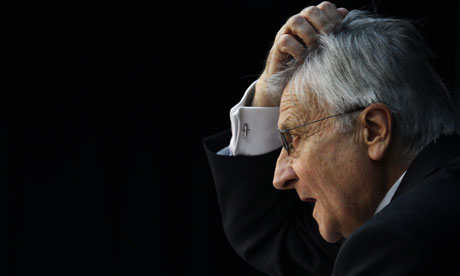
Jean-Claude Trichet, President of the European Central Bank

ΠΗΓΗ: GUARDIAN
του Μ. Weisbrot

Jean-Claude Trichet, president of the European Central Bank, answers reporters' questions at his monthly news conference at the ECB headquarters in Frankfurt. The ECB is mandated only to control inflation, not unemployment. Photograph: Kai Pfaffenbach/Reuters
The euro is crashing to record lows against the Swiss franc, and interest rates on Italian and Spanish bonds have hit record highs. This latest episode in the eurozone crisis is a result of fears that the contagion is now hitting Italy. With a $2tn economy and $2.45tn in debt, Italy is too big to fail and the European authorities are worried.
Although there is currently little basis for the concern that Italy's interest rates could rise high enough to put its solvency in jeopardy, financial markets are acting irrationally and elevating both the fear and the prospects of a self-fulfilling prophesy. The fact that the European authorities cannot even agree on how to handle the debt of Greece – an economy less than one sixth the size of Italy – does not inspire confidence in their capacity to manage a bigger crisis.

Σάββατο 18 Ιουνίου 2011

Greece: bond slave to Europe


Πηγή: Guardian
το Μ. Weisbrot
Imagine that in its worst year of our recent recession, the United States government had decided to reduce its federal budget deficit by more than $800bn – cutting spending and raising taxes to meet this goal. Imagine that, as a result of these measures, the economy had worsened and unemployment soared to more than 16%; and then the president pledged another $400bn in spending cuts and tax increases this year. What do you think would be the public reaction?
It would probably be similar to what we are seeing in Greece today, including mass demonstrations and riots – because that is what the Greek government has done. The above numbers are simply adjusted for the relative size of the two economies. Of course, the US government would never dare to do what the Greek government has done: recall that the budget battle in April,which had House Republicans threatening to shut down the government, resulted in spending cuts of just $38bn.

Κυριακή 15 Μαΐου 2011

Where I part from Paul Krugman on Greece and the euro


Πηγή: The Guardian
του Mark Weisbrot
Paul Krugman responds to my op-ed earlier this week in the New York Times on Greece and the eurozone with agreement and disagreement. He agrees that "Argentina is the right parallel" for the Greek situation, and that "the programme for Greece is not working; it's not even close to working." But he disagrees on exiting the euro, for two reasons: first, Argentina "still had peso notes in circulation, so the mechanics of exit from the peg were much easier than exiting the euro would be"; and second, "Greece, as a relatively poor country with a history of shaky governance, has a lot to gain from being a citizen in good standing of the European project."
These are good points, and I think reasonable people can disagree on whether Greece should consider leaving the euro; there are a number of risks and uncertainties with that path as well as the current path.

Τρίτη 10 Μαΐου 2011

Why Greece Should Reject the Euro


By Mark Weisbrot

This article was published in the The New York Times, on May 10, 2011.


Sometimes there is turmoil in the markets because a government threatens to do what is best for its citizens. This seemed to be the case in Europe last week, when the German magazine Der Spiegel reported that the Greek government was threatening to stop using the euro. The euro suffered its worst two-day plunge since December 2008.


Greek and European Union officials denied the report, but a threat by Greece to jettison the euro is long overdue, and it should be prepared to carry it out. As much as the move might cost Greece in the short term, it is very unlikely that such costs would be greater than the many years of recession, stagnation and high unemployment that the European authorities are offering.


The experience of Argentina at the end of 2001 is instructive. For more than three and a half years Argentina had suffered through one of the deepest recessions of the 20th century. Its peso was pegged to the dollar, which is similar to Greece having the euro as its national currency. The Argentines took loans from the International Monetary Fund, and cut spending as poverty and unemployment soared. It was all in vain as the recession deepened.