Εμφάνιση αναρτήσεων με ετικέτα ΑΡΘΡΑ / Δουζίνας Κ.. Εμφάνιση όλων των αναρτήσεων

Τετάρτη 2 Μαΐου 2012

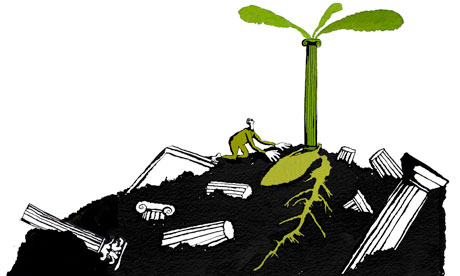
The Greek election could be the start of a European spring


Illustration by Belle Mellor
ΠΗΓΗ: Guardian
του Κ. Δουζίνα
Sunday may be the first day of a European spring. In the French election a victory for François Hollande, a socialist who has rejected the fiscal pact, would be the first challenge to the policies Angela Merkel and EU technocrats have imposed on Europe. B ut the result of the Greek elections may have even greater symbolic significance.
The first act of the ongoing Greek tragedy ended last November, with the resignation of the Papandreou government. Popular opposition to austerity – along with Merkel's and Nicolas Sarkozy's fear of a Greek referendum on euro membership – brought him down. The Greek elections will mark the end of the second act, with a cast of dominant parties and politicians exiting, stage right.
The caretaker government, led by Lucas Papademos, is a coalition ofPasok and New Democracy, the dynastic parties which have ruled Greece for 40 years and brought it to its present predicament. Their election campaigns have brought surrealism to the hustings. The overwhelming rejection by the Greek people of the IMF-EU measures has forced the two governing parties to argue against the very policies they themselves ushered in and are still implementing. Imagine if not a few but every Lib-Dem and Tory politician were to campaign against coalition policies.

Σάββατο 10 Μαρτίου 2012

Τhe Guardian: Τι έπεται για την Ελλάδα - κατάρρευση ή ανάσταση;


ΠΗΓΗ: Αυγή
του Κώστα Δουζίνα

Ο τρόπος που παρουσιάζεται η ελληνική τραγωδία τα τελευταία δύο χρόνια δίνει την εντύπωση πως τα οικονομικά είναι κάποια φοβερά περίπλοκη επιστήμη. Ωστόσο οι οικονομολόγοι του κυρίαρχου ρεύματος που έδωσαν πιστοποιητικό αρίστου υγείας στη Λίμαν λίγο πριν καταρρεύσει, προέβλεψαν πως από το 2012 η ελληνική οικονομία θα ξεκινούσε να αναπτύσσεται. Η οικονομία συρρικνώθηκε κατά 7% πέρυσι και περαιτέρω μείωση του 6% προβλέπεται φέτος, με τα χειρότερα να ακολουθούν. Πρόκειται για τη γοργότερη πτώση στην εποχή μας. Η πειθαρχημένη προσκόλληση σε τέτοιου τύπου οικονομικά προσιδιάζει περισσότερο σε τέχνασμα εμπιστοσύνης παρά σε επιστήμη.
Ο Καρλ Σμιτ και η Χάνα Αρεντ περιέγραψαν με μελανά χρώματα την εποχή που τα οικονομικά θα υπερίσχυαν της πολιτικής. Έγινε η πρόβλεψή τους πραγματικότητα; Ο αργός θάνατος της Ελλάδας ήταν ένα πολιτικό πρότζεκτ ευθύς εξαρχής, με τους πολιτικούς να αποδέχονται τις νεοφιλελεύθερες οικονομικές επιταγές. Η χώρα μετατράπηκε στο ινδικό χοιρίδιο για το μέλλον μιας Ευρώπης που θα εξουσιάζεται από γερμανικό κεφάλαιο και και από τα ευρωστελέχη. Τα οικονομικά μέτρα σχεδιάστηκαν στο Βερολίνο και τις Βρυξέλλες και εφαρμόζονται στην Αθήνα από εύκαμπτους πολιτικούς. Στόχος τους είναι να μειώσουν βίαια το βιοτικό επίπεδο καθημερινών ανθρώπων, να καταργήσουν τις τελευταίες κοινωνικές δομές πρόνοιας και να δημιουργήσουν τριτοκοσμικές συνθήκες εργασίες. Η πολιτική στην Ελλάδα στο μεταξύ έχει μετατραπεί σε πείραμα για το πώς θα επέλθει η κατάρρευση ενός συστήματος εξουσίας.

Πέμπτη 15 Δεκεμβρίου 2011

The IMF must realise that, in Greece, the treatment is worse than the disease


During an official visit to the LSE in November 2008, the Queen asked a professor why economists had failed to predict the financial crash, the most dramatic event in recent economic history. The professor's answer is not known. A year later, after a British Academy seminar, eminent economists answered by blaming "a failure of the collective imagination of many bright people, both in this country and internationally, to understand the risks to the system as a whole".
Yesterday the IMF reported that the Greek economy had "taken a turn for the worse" against its earlier predictions. The growth forecast for 2011 was revised downwards from -4% to -6% for 2011 and to -3% for 2012. The 2011 deficit, predicted at 7.5% of GDP, has now been revised to 9%. Greek officials expect it to be more than 10%. Public debt was 130% of GDP in 2009. The IMF predicts now that it would peak at 187% in 2013 and fall to 152% of GDP by 2020, if all measures imposed on Greece succeed. This is unlikely. The selling off of the remaining public assets has yielded very little and negotiations with private creditors who were asked to accept a 50% writedown by the EU October summit have stalled. It will take 10 years, the IMF reports, for Greece to close the competitiveness gap. It will take much shorter to destroy the Greece we know.

Τρίτη 1 Νοεμβρίου 2011

The final blackmail of Baron Papandreou


by Costas Douzinas
The unexpected announcement by Greek PM Papandreou yesterday that he is to call a referendum and ask people to vote about the October 24 agreement is the opening salvo in the endgame of the Greek tragedy. Is this extraordinary gambit a genuine request for a popular mandate or a desperate bluff of a gambler down on his chips? In one obvious way, involving the people in one of the most important decisions of Greek history sounds positive. But as constitutional lawyers and political theorists have explained the use of referenda is not necessarily democratic. Unlike referenda called by a popular initiative, like the recent Italian which reversed the privatisation of water, referenda have been used often to bolster failing governments rather than to give an authentic choice to the people. The formulation of the question by the government according to its priorities, the question’s yes or no character, its lack of nuance and gradation means that on most occasions government referenda are means of blackmailing the people or of forcing an already taken decision.

Παρασκευή 21 Οκτωβρίου 2011

Greece's lines now are clear


Πηγή: Guardian
του Κ. Δουζίνα

The workers in a small bakery in central Athens announced this week that, while they would not close because they serve many vulnerable people, they were joining the two-day general strike by charging all products at cost. An unexpected surprise in these hard times for their customers, but an ordinary story of the life of resistance and kindness in the Greek capital. At the same time, no minister or MP can appear in public without being heckled or "yoghurted" (the Greek-style "pieing").
Greece is split in two. On one side are politicians, bankers, tax evaders and media barons supporting the most class-driven, violent social and cultural restructuring western Europe has seen. 

Δευτέρα 27 Ιουνίου 2011

Η Ελλάδα αντιστέκεται στον νεο-αποικισμό της ΕΕ


ΠΗΓΗ: GUARDIAN


των Κ. Δουζίνα, Π. Παπακωνσταντίνου


After months of attacks on the supposedly feckless Greeks, the western media, intellectuals such Amartya Sen and Jürgen Habermas and theUnited Nations have finally woken up to the fact that the catastrophic austerity imposed on Greece is unsustainable. It was about time. This is an unprecedented and morally odious type of collective punishment imposed on a majority of Greeks, who did not see a penny from the profligacy of their rulers and who live close to the poverty line.

The partial acknowledgment of the injustice and unworkability of the austerity measures came only after popular resistance and the peaceful revolt of the indignant scored its first major victory for the anti-austerity and pro-democracy campaign. Syntagma has placed a clear sell-by date on George Papandreou and the elites that ruled Greece for 37 years. The vote of confidence for the reshuffled government bought a limited amount of time, deferring its inevitable collapse. Offering to resign on Wednesday morning and, when his offer was turned down, offering the de facto leadership of the party and government to Evangelos Venizelos, his bitter party enemy, in the evening, Papandreou is a "dead man walking". While most commentators believe the virtually bankrupt country must default and negotiate a substantial reduction of debt, the government keeps insisting that it will repay every last penny.

Δευτέρα 21 Φεβρουαρίου 2011

Οι ναρκισσισμοί των μικρών διαφορών αδρανοποιούν την ελληνική αριστερά


ΠΗΓΗ: ΕΠΟΧΗ
ΠΡΩΤΟΒΟΥΛΙΕΣ ΑΠΟ ΤΑ ΚΑΤΩ ΘΑ ΦΕΡΟΥΝ ΜΑΖΙ ΑΥΤΟΥΣ ΠΟΥ ΔΙΑΦΩΝΟΥΝ
Tου
Κώστα Δουζίνα
Πριν έναν περίπου χρόνο, τον Φεβρουάριο του 2010, όταν οι ευρωπαϊκές και ντόπιες ελίτ επέβαλλαν στην Ελλάδα τα πρώτα μέτρα λιτότητας, το επιχείρημα που χρησιμοποιήθηκε κατά κόρον ήταν ότι χωρίς αυτά η κρίση θα εξαπλωνόταν στην Ευρώπη, απειλώντας το ευρώ. Σε ένα άρθρο μου στην εφημερίδα Guardian υποστήριζα τότε ότι ο κύριος κίνδυνος εξάπλωσης και «μόλυνσης» προερχόταν από την αναμενόμενη αντίσταση του ελληνικού λαού· μια μικρή γνώση της ελληνικής ιστορίας μας προετοίμαζε για το τι μπορούσε να ακολουθήσει.
Η αντίσταση σαρώνει σήμερα όλη την Ευρώπη: η Μεγάλη Βρετανία, η Γαλλία, η Ισπανία αντιμετωπίζουν το μεγαλύτερο κύμα διαδηλώσεων και διαμαρτυρίας των τελευταίων τριάντα χρόνων. Οι ελληνικές κινητοποιήσεις ενθάρρυναν τους λαούς, οδηγώντας στην πρώτη πανευρωπαϊκή καμπάνια για τα κοινωνικά θέματα. Άκουσα το σύνθημα «Θα τα κάνουμε Αθήνα» στην Μπογκοτά της Κολομβίας και στο Λονδίνο. Οι άγγλοι φοιτητές που βγήκαν στους δρόμους ενάντια στην ιδιωτικοποίηση και εμπορευματοποίηση του Πανεπιστημίου, ακολούθησαν τις ελληνικές πρακτικές -αν και απέτυχαν να κάψουν το χριστουγεννιάτικο δέντρο στην Τραφάλγκαρ Σκουέρ. Η εξέγερση στην Αίγυπτο και το κίνημα των μεταναστών εδώ είναι κι αυτές έμμεση απάντηση στην παγκόσμια κρίση. Μπήκαμε πια στο τέλος της «νέας παγκόσμιας τάξης» που κηρύχθηκε το 1989.